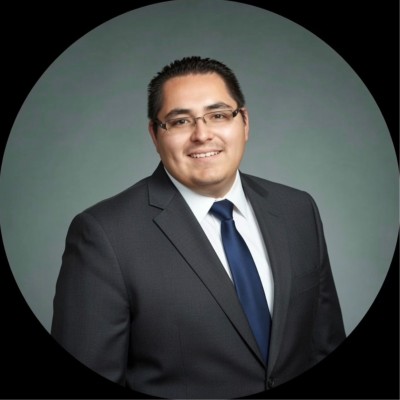
01 / The Verdict
They told him he could not learn. He decided that was a problem to solve, not a sentence to serve.
Efren Salazar grew up in a farm-working, immigrant family in the Sacramento area. Money was tight. Resources were tighter. English was not his first language, and he did not really speak it until he was around sixteen.
School handled that the way schools often did. He was placed in special education classes, and for years teachers told him directly that he could not learn. Not that he was behind. Not that he needed time. That he could not. He got his high school diploma as an adult, close to thirty years old.
Here is the part most people miss. While he was being told he could not learn, he was quietly doing the hardest kind of learning there is. Nobody handed him a manual for how school worked, how English worked, or how a career in technology worked, so he did to his own life exactly what a good analyst does to an unfamiliar system. Watch it closely. Find the pattern. Take it apart. Rebuild it well enough to use.
That instinct, treating the thing you do not understand as solvable instead of as a verdict on you, is the origin of every framework he teaches today. It did not start as a business method. It started as survival. Only later did it become a system he could hand to someone else.
"Never let your current title determine your future potential. You can create opportunities for yourself before someone gives you permission."
Efren L. Salazar
02 / Miss England
One teacher stayed after class. That is the whole reason this platform exists.
In sixth grade, a teacher named Miss England stayed late on her own time and taught him the fundamentals. Letters. Sounds. Reading. One on one, when nobody was making her and nobody was paying her.
She is the reason he believes the mentorship model behind Wake Up X actually works, and he says it plainly: one person, willing to give a little extra time, can change the entire shape of someone's future.
"If you're reading this, Miss England: thank you for not giving up when everyone else already had. Everything after this page exists because of that one decision."
Efren L. Salazar, DECODE
03 / The Computer With No Mouse
The start of a technology career, and it did not look like one.
The curiosity showed up early. By ten he was taking clocks apart and wiring speakers into them, just to see what would happen.
At thirteen, his family received a donated computer. An early-1990s Windows PC with no working mouse. Most kids would have called that broken. He taught himself to run the entire machine from the keyboard alone. The start menu, the command prompt, all of it. Nobody showed him how. He simply refused to let a missing part be the reason he stopped.
That machine, not a class and not a certification, is where the career actually began. From there he started fixing computers and phones for anyone who would let him, language barrier and all.
04 / The Janitor Who Wanted to Understand
If nobody will open a door for you, walk through one that is already open.
Between fourteen and sixteen, he applied for everything he could reach. Dishwashing. Janitorial work. The simplest jobs on the board. Nobody hired him. Not even part-time. So he stopped waiting to be chosen and went looking for open doors instead. That meant volunteering.
One of those doors was the Calling Teen Center in West Sacramento, where his first official position was janitorial work and washing dishes. Not glamorous. But it put him inside the building. Inside that building was a program called Computers for Kids, led by Lewis Bair. The deal was simple: volunteer a set number of hours, walk away with a free computer. Efren was never there for the computer. When his hours were done, he asked to stay on, unpaid, just to keep learning. He was one of the first volunteers who asked for more instead of less.
He started at the bottom of it, essentially help desk work, sitting with people and walking them through the basics of a machine they had never really used. His cousin was right there with him through a lot of it. But the longer he stayed, the more he noticed something about himself. He was not only interested in the fix in front of him. He wanted to know how the whole operation ran underneath it. How people got signed up. How the workflow moved. What was slow. What nobody had gotten around to improving yet. Not because he thought he knew better than anyone there, but because he could not turn the question off. That curiosity moved him from help desk into a supervisor role, running the administrative side.
"If nobody wants to give me the opportunity, I'm going to make my own opportunity."
Efren L. Salazar
By sixteen, neighbors were leaving computers on his doorstep. Twenty dollars for one repair. Forty for another. Some days close to a hundred and fifty. He was still a teenager nobody would hire, quietly running a business out of his own front room. To Computers for Kids, and to Lewis Bair, thank you for the door you opened for a kid who just wanted to understand how things worked. That opportunity is still paying forward today.
05 / Where the Standard Came From
His parents arrived with nothing and gave most of it away anyway.
His parents came into this country as farm workers with no money, no housing lined up, and no English. They built a life regardless, and then spent whatever was left over helping everyone around them, family and strangers both. Sometimes they were taken advantage of for exactly that generosity.
Watching that removed every excuse he could have made for himself. If they could do that with nothing, he had no right to sit on what little he did have. That is the real root of why he cares more about lifting the people around him than about being the smartest person in a room. Years later, building Wake Up X felt less like starting something new and more like continuing something they had already taught him.
06 / The Cousin Who Saw It First
He was already living the life Efren could not yet picture.
The neighborhood supplied its own mentors, and its own outcomes. Friends went to prison. Friends overdosed. Friends died. When that is all you see, it stops looking like tragedy and starts looking like the ordinary shape of a life. Efren is honest that for a while, it did. Some of the older men around him told him to get out while he still could. Others told him the opposite.
Then there was his cousin, Rojelio Salazar. Humble, always lifting the people around him, running his own computer shop. He was already living the life Efren could not yet picture for himself, and he said so plainly.
"Get out of the streets. I went through this already and it is not worth it. Get into your business. You're already smart enough, you know what you're doing. So just keep going. Keep going and don't stop."
Rojelio Salazar, cousin and mentor
Then Rojelio died. Efren lost the one person who had reached out and taken his hand through the whole process. For a long time afterward, he was afraid to let anyone else get that close, in case he lost them too. He drifted. He got quiet. As he puts it, he was never a bad kid. He was just around bad people. Until one ordinary day, he was simply done being stuck. "I just have to wake up." That sentence is not a slogan somebody wrote for him. It is the moment this entire platform is named after.
07 / The Book That Turned the Volume Up
Multiply the goal by ten and watch what you become willing to attempt.
What turned that decision into a direction was a book. He listened to Grant Cardone's The 10X Rule and took one idea from it: whatever goal you set, multiply it by ten. Not because you will always reach it, but because aiming ten times higher changes what you are willing to attempt in the first place. Set out to make a hundred dollars a day and the instinct is to stop at a hundred. Aim far past it, and even falling short leaves you somewhere you would never otherwise have stood.
It did something else, too. It took the isolation, the language barrier, and the years of being told he could not learn, and it turned all of it from something he was hiding into fuel. Wake Up X started as exactly that kind of oversized goal, in a small conversation with a friend about what might be possible. He did not expect it to become what it became.
The library that rebuilt his thinking was almost none of it cybersecurity. That is on purpose. The technical material is everywhere. The books on resilience, habits, sales, marketing, leadership, money, negotiation, and influence are the part almost nobody in this field reads, and closing that gap is the reason the Wake Up X library exists at all.
08 / Belonging Nowhere, and Choosing to Uplift Anyway
The gap he found is exactly where he decided to stand.
One job during that same stretch was at a Mexican restaurant. He is Mexican American, first generation, and he figured that would count for something there. Instead, coworkers who were Mexican themselves made sure he knew he did not belong. He was told, more than once, that he was not important enough. That even if he thought he was better, he was never more and above them. That they were the real, traditional Mexicans, the hard workers, and he was not.
He had no comeback in the moment, and he did not go looking for one. What he told himself instead was this: maybe he did not have the same potential they believed they had, but he had something different. Dedication. And a willingness to learn and to extend what he knew. He used it as motivation to move faster, not to prove anyone wrong to their face. He never let them see it land.
Part of that was understanding, even then, that this would keep happening in different rooms for the rest of his life. Part of it was already knowing it was not going to be the thing that decided his future. Obstacles like that are always going to happen. They do not define what comes after them.
Growing up, he never fully fit the American side or the Mexican side. Sitting outside both gave him a strange kind of clarity about a pattern he has watched repeat in room after room since: a tendency to push each other down to look better by comparison, instead of pulling each other up. So he made a decision a long time ago. If almost everyone around him was willing to belittle, and almost nobody was willing to uplift, then that gap was exactly where he could make a difference. Wake Up X, the mentoring, Computers for Kids before all of it, they come out of the same choice: be the uplift he did not get.
09 / Compu-Fix 2u
Before the storefront, there was a folding cart in a hair salon.
It is easy to look at a real store and assume that is where the story started. It did not. Years before any of it, a mobile setup called Compu-Fix 2u ran computer and Mac repairs, virus removal, and free diagnostics out of borrowed space, including a folding cart set up inside a hair salon in West Sacramento. No storefront. No funding. Just a phone number, a laptop cart, and a habit of showing up wherever a client would let him work.
That matters more than the shop that came after it, because it proves the order of operations. The business came first. The location came later. Build the capability and the reputation before you have the office, the title, or the budget to make it official. A business is the skill plus the willingness to show up. Everything else, the storefront, the brand, the team, gets built on top of that. Never before it.
10 / The Cell Phone Fix
One message. One shared vision. Seven years, two locations.
The repair work turned into a real company through a chance referral. A stranger's cousin brought him a broken computer, and that introduction eventually led to a partner. Erick Arauza reached out on Facebook with a simple proposition: open a store together. As the business grew, Erick's brother Pancho joined them. The three of them built The Cell Phone Fix, Computer and Cellphone Repairs into one of the most recognized repair shops in Sacramento, with customers driving as far as six hours to use it. Both locations are still open today.
It worked because they were opposites, not mirrors. Efren ran the technical side. His partner ran sales. That single lesson, that the right partner covers the half of the business you are worst at, still shows up in everything he teaches. Efren stayed seven years and learned the trade behind the trade: marketing, content creation, video production, website development, community engagement. It is the exact foundation everything he builds now stands on.
Along the way he failed more times than he can count, and got taken advantage of at least once badly enough that it pushed him straight toward governance and compliance work. He does not tell that part as a warning. He tells it as a curriculum.
11 / The Corporate Classroom
He left his own business to learn what it could not teach him alone.
Efren entered the corporate world deliberately at the entry level, working across GRC, cybersecurity, network infrastructure, and enterprise IT. Starting at the bottom was not a setback. It was a strategy.
Cybersecurity itself arrived through a colleague. Efren was the tech two. Igor was the tech one. On paper, that hierarchy told you everything you needed to know. In practice, they taught each other. Efren handed over what he knew about IT. Igor handed back the fundamentals of security, and that is where the curiosity started. Then Igor moved into cybersecurity before he did. Plenty of people would file that away as being overtaken. Efren tells it as the proudest thing on his resume.
"I want to see somebody get better than me. I want to see somebody do better than me. That is the whole mission."
Efren L. Salazar
It is also why titles carry so little weight with him. A tech one can outrun a tech two. Somebody with no certifications can out-think somebody holding ten. He is deliberately open about his own credentials, because of how many people those credentials would have disqualified. No bachelor's degree. No master's. For a long time, not even a high school diploma, and he built and ran multiple real businesses anyway. He went back and finished the diploma a few years ago, not because he needed it to succeed, but to close that chapter on his own terms. Today he pairs it with industry certifications and years of hands-on business experience, and he mentors people holding master's degrees and ten or more certifications. His point is not that school does not matter. It is that your title does not decide your ceiling.
12 / Nobody Handed Him the Opportunity
Build in public long enough and the room starts to recognize you before you introduce yourself.
He did not get a referral into this industry, and he did not get handed a career. Every job, every client, every certification came from building something visible enough that people could find it, and then showing up in person to back it up. Visibility never replaced the work. It is what let the work get seen.
There is a moment he points to when people ask whether it actually works. A project post he had put out ended up on a screen at a national conference, and a stranger walked up pointing at it like she already knew him. She did not, not really. The post had done that work in advance. That is the entire argument he makes to anyone starting out. Build it where people can find it, and keep building it after it stops feeling impressive.
13 / ISACA and the Community
He never stopped showing up. He just did it with a larger purpose.
The pattern that started at a teen center never changed. Walk in. Volunteer. Be useful. Say yes. It is how he found ISC2, and it is how he found ISACA Sacramento, arriving as a volunteer who set up rooms, talked to people, and asked for nothing in return. That turned into Chair of Communications, and then into a partnership with the chapter's Government and Regulatory team, with plans to run for a leadership seat again. He attended RSA Conference 2026 with a specific mission: put Sacramento and ISACA on the national map.
Then he did something that surprised a lot of people. He ran for Director of Communications at ISACA Sacramento against an accomplished CISO with more than twenty years of executive leadership and a reputation that spoke for itself. On one side, all the titles. On the other side, a technician, an entrepreneur, a community builder, and a podcast host who had started as a volunteer and worked his way into the room.
What set his campaign apart was simple. He did not just talk about building a communications platform. He had already built one. The Wake Up X Solutions had put him in real conversations with CISOs, CTOs, founders, students, and people just starting out, reaching audiences across YouTube, Spotify, Apple Podcasts, and LinkedIn. His vision was just as clear: connect ISACA Sacramento to the Bay Area and Southern California into one statewide network, bring in students from local universities, and give members more visibility for the work they do.
Out of 46 votes, he earned 43.5 percent. He did not win the seat, and he is completely at peace with that. A regular tech professional stepped into the arena with a seasoned executive and walked away with nearly half the vote. That is proof that hard work, consistency, relationships, and service still matter more than a line on a resume. He walked away with something better than a title, too. He and Ken Kerrick, who won the role, turned out to have a lot in common, both from immigrant working families, and what started as a race became a friendship. Efren has already invited Ken onto the show to tell his own origin story. They were never there to compete. They were there to learn from each other and grow the community. Different paths, same mission.
14 / The Rebuild Nobody Saw
100 pounds in 7 months, fixed the same way he fixes everything else.
Every framework he teaches assumes you have the energy, focus, and stamina to use it. That assumption is not free. For years he ran a business, worked full-time in IT, and built a podcast while carrying weight that was slowly taking all three away from him. Leveling up your title means nothing if you do not level up the body and mind carrying you through the climb.
He did not fix it with a program he bought. He fixed it the way he fixes a broken laptop or a failing business process. He got honest about the real problem, built a structure he could actually repeat, and stopped doing it alone. In seven months, training naturally with no shortcuts, he lost 100 pounds. The number is not the point. The rebuild underneath it is.
Name it. Stop calling it being busy. Name the actual pattern you are stuck in, out loud, to someone.
Structure it. Turn the goal into a repeatable weekly system, not a one-time burst of motivation.
Witness it. Bring in people who see your effort and hold you to it. Willpower alone runs out.
Repeat it. The plan does not need to be perfect. It needs to survive a bad week and still run.
Become it. At some point the identity flips from trying to change to this is who I am now.
What started as a personal rebuild became a small community and a brand: Obese to Obsessed, under Efren's Vizion. Not a diet plan. A standing reminder that the same discipline that rebuilds a body rebuilds a career, a business, or a bad year, and that none of it has to be done alone.
15 / The Mission
Education. Community. Access. For everyone who was told no.
There is a habit in this industry Efren set out to break. Some people guard what they know. Ask them how they got in and the door quietly closes, because helping you might cost them their edge. He watched enough of that to reach a conclusion. The field does not need more specialists keeping score. It needs places where the answer is simply handed over.
That is the whole gap, and it is not talent, intelligence, or work ethic. It is access. Somebody who already made the jump you are trying to make, willing to tell you honestly how they did it. Most people never get to meet the person who is one step ahead of them.
So the platform became more than a podcast. It is a community with real training resources, courses, and a free library, including DECODE and 11 companion books covering everything from landing a first role to building a home lab, thinking like a practitioner, understanding the business, leading without a title, using AI as a real tool, building a brand, consulting, and leveling up without burning out. Nothing is held back for a paid tier. It reaches people at every stage: the elderly learning technology, young people finding their footing, professionals looking for permission to start over.
"Our community is big and our people are even bigger, but nobody is there to connect it and bridge it together."
Efren L. Salazar
His goals from here are specific. Cybersecurity consultant. Founder of a Managed Security Service Provider. Community leader bridging Sacramento with the Bay Area and Southern California, running training programs that close the gap between where people are and where this industry needs them to be. And he still runs all of it at once. A full-time role in IT operations and solution engineering, The Wake Up X Solutions, and a partnership with the ISACA Sacramento Government and Regulatory team, because the mission does not pause for a schedule.
The Point of All of It
He does not tell this story so you feel something about him. He tells it so you trust the advice was earned.
He was told he could not learn. He learned anyway. He was told he was not important enough. He built something that made the question irrelevant. He was never given the opportunity, so he made one, and then spent the rest of his career making them for other people.
Every episode is documentation of a journey and proof of one truth: it does not matter what certification you hold or where you are starting. If you have hunger, ambition, and the will to keep showing up, you can build something that matters. And if any part of this path sounds like yours, everything he has built exists to make your version faster than his was.
Securing Tomorrow. Empowering Today.